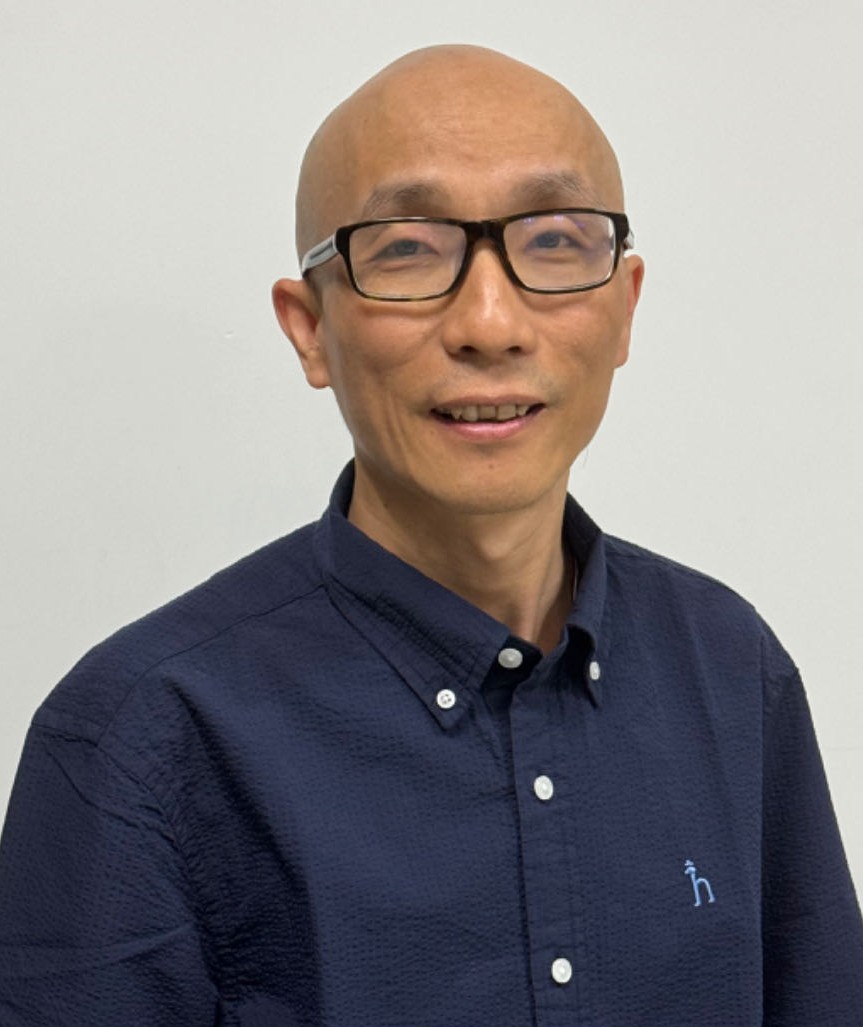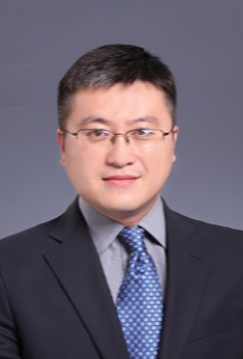
| Prof. Badong ChenXi'an Jiaotong University Badong Chen received the B.S. and M.S. degrees in control theory and engineering from Chongqing University, in 1997 and 2003, respectively, and the Ph.D. degree in computer science and technology from Tsinghua University in 2008. He was a Postdoctoral Researcher with Tsinghua University from 2008 to 2010, and a Postdoctoral Associate at the University of Florida Computational NeuroEngineering Laboratory (CNEL) during the period October, 2010 to September, 2012. In 2015, he visited the Nanyang Technological University (NTU) as a visiting research scientist. He also served as a senior research fellow with The Hong Kong Polytechnic University in 2017. Currently he is a professor at the Institute of Artificial Intelligence and Robotics (IAIR), Xi’an Jiaotong University. His research interests are in signal processing, machine learning, artificial intelligence, neural engineering and robotics. |
| Prof. Jizhong ZhuSouth China University of Technology Dr. Jizhong Zhu is a Nationally high-level talent, a Member of the European Academy of Sciences and Arts, Member of National Academy of Artificial Intelligence, a Foreign Corresponding Academician of the Academy of Sciences of Bologna, Italy, a a Foreign Fellow of ASEAN Academy of Engineering and Technology, an IEEE Fellow, a Foreign Fellow of the China Electrotechnical Society (CSEE Fellow), an IET Fellow, and a Fellow of multiple AI associations. He is a Professor and PhD supervisor at South China University of Technology and a part-time Professor at Chongqing University. He serves as Chair of the IEEE PES Smart Buildings, Loads, and Customer Systems Technical Committee (China) and holds editorial and leadership roles in several international standards and journals. Dr. Zhu worked for over 20 years in the UK, Singapore, and the USA before returning to China in 2016 as a distinguished expert at China Southern Power Grid Research Institute. Since 2019, he leads the Integrated Smart Energy Systems Optimization team at South China University of Technology. He has published over 400 papers, holds more than 30 patents, authored several international books, and received numerous national and international awards, including IEEE International Standards Contribution Awards and the China Southern Power Grid Science and Technology Progress Special Prize. |
| Prof. Feifei GaoTsinghua University Tenured Professor at the Department of Automation, Tsinghua University; Recipient of the National Science Fund for Distinguished Young Scholars; IEEE Fellow. Research interests include ultra-massive MIMO communication, integrated sensing and communications (ISAC), multimodal intelligent communication, and embodied artificial intelligence. The team has self-developed a 256-channel wideband direct RF sampling software-defined radio platform, an anti-jamming ad hoc network communication module supporting 10,000 hops per second, and an FPGA+GPU heterogeneous unit for integrated sensing, communication, computing, control, and embodied AI. He has published over 200 IEEE journal papers with more than 22,000 Google Scholar citations. He has served on the editorial boards of IEEE TCOM, IEEE TWC, IEEE JSTSP, IEEE TCCN, IEEE CML, IEEE SPL, IEEE WCL, and China Communications. |
 | Prof. Mang YeWuhan University Professor at the School of Computer Science, Wuhan University; Director of the Department of Intelligent Science; Principal Investigator (PI) at Taikang Center for Life and Medical Sciences; PhD Supervisor. Recipient of the National High-Level Young Talent award, the Young Talent Support Program of the China Association for Science and Technology, and the Hubei Provincial High-Level Talent recognition. He received his PhD from Hong Kong Baptist University in 2019 and returned to Wuhan University as a professor at the end of 2020. He previously served as a Research Scientist at the Origin Artificial Intelligence Research Institute (UAE) and a Visiting Scholar at Columbia University (USA). His main research interests include trustworthy multimodal computing, large multimodal models, federated learning, and medical artificial intelligence. He has published over 100 CCF-A papers as first/corresponding author, with more than 17,000 Google Scholar citations. His work has been positively cited and evaluated by several Chinese and foreign academicians, including Turing Award laureate Geoffrey Hinton. |
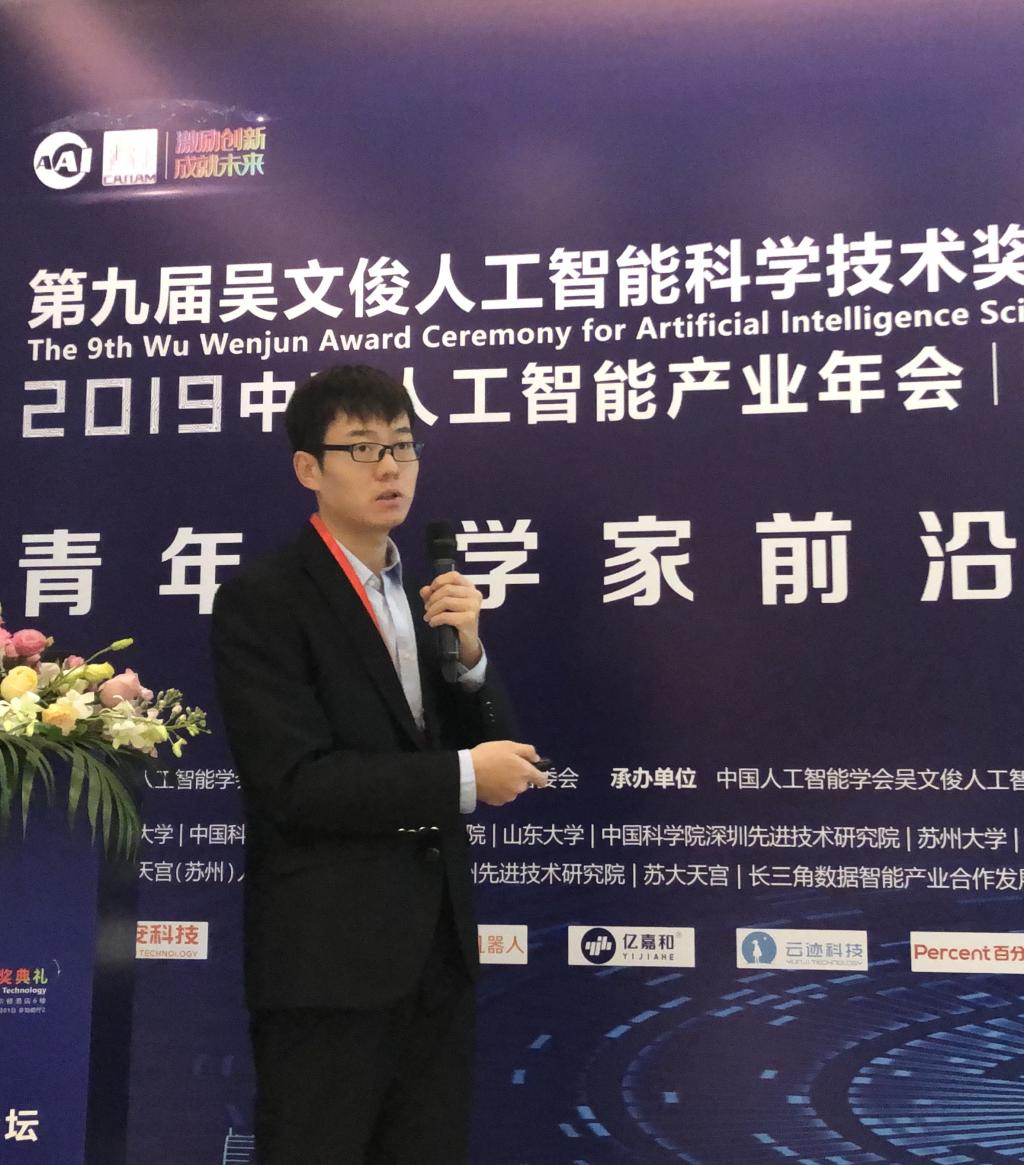 | Prof. Ning SunNankai University He is a Professor, PhD Supervisor, and Deputy Director of the Strategic Development Department at Nankai University / Nankai University Shenzhen Research Institute. He is also an Adjunct Professor at Shenzhen Hetao College. He has been recognized as a Young Changjiang Scholar, a Baosteel Outstanding Teacher, a Tianjin Science Fund for Distinguished Young Scholars awardee, and a Foreign Special Researcher of the Japan Society for the Promotion of Science (JSPS). His research focuses on robotic intelligent control and its applications. He has presided over key projects, joint key projects, and general projects (2 projects) of the National Natural Science Foundation of China (NSFC), as well as two projects under the National Key Research and Development Program of China. |